
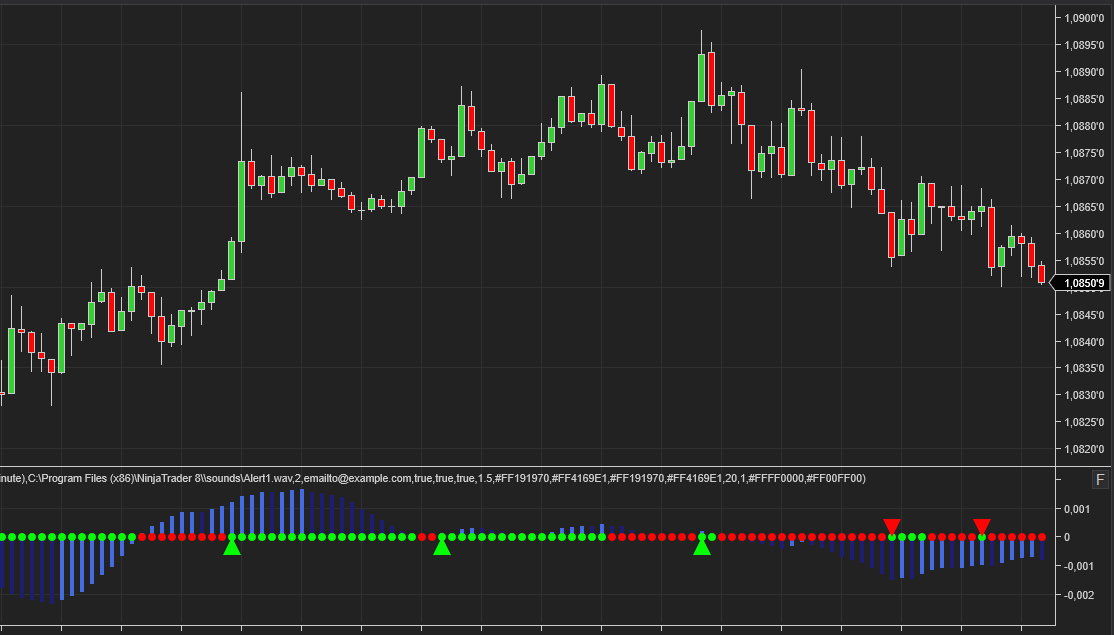
NinjaTrader TTM Squeeze Indicator is based on three classic technical analysis tools – Bollinger Bands (BB), Keltner Channels and Momentum Oscillator.
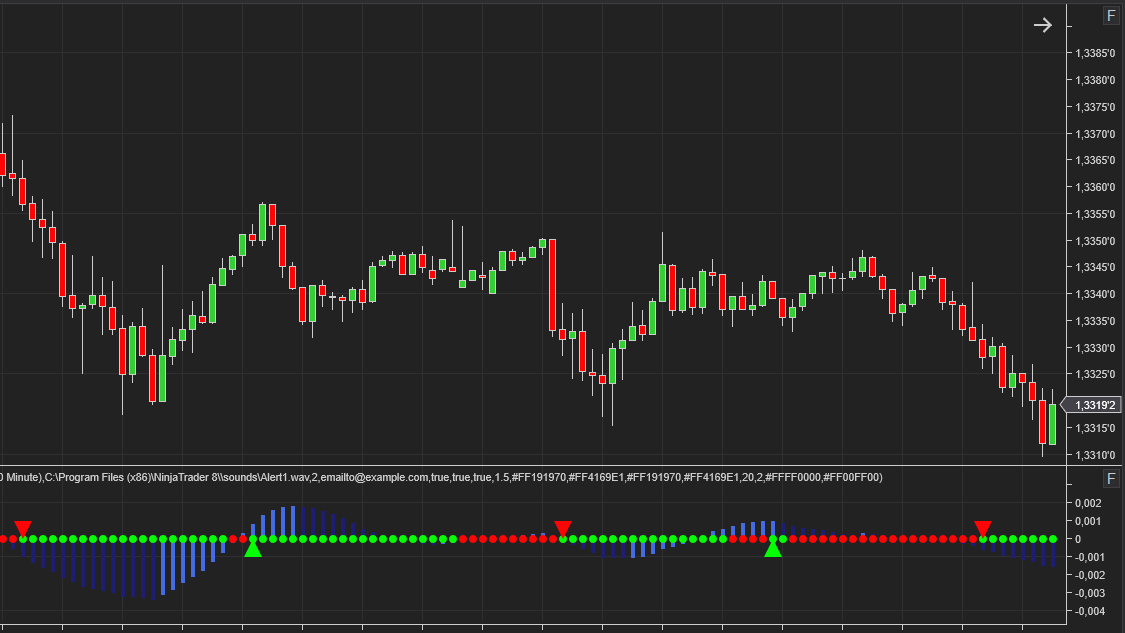
The integration of Bollinger Bands (BB) and Keltner Channels serves to identify phases of market consolidation (squeezing) and highlights transitions toward potential volatility expansion.
A low-volatility environment is identified when the Bollinger Bands are positioned within the Keltner Channels, reflecting a period of price compression. A subsequent shift occurs when the Bollinger Bands move outside the Keltner Channels, indicating an increase in volatility and a potential transition into a directional phase.
Volatility compression and expansion cycles are widely studied in technical analysis, as periods of low volatility are often followed by increased market activity.
During this shift from consolidation, the Momentum Oscillator is used to analyze the prevailing directional strength. This oscillator provides a visual representation of momentum alignment, assisting in the technical evaluation of structural market shifts. Unlike standalone volatility or momentum indicators, this approach combines both components into a unified framework, allowing simultaneous observation of volatility compression and directional momentum conditions.
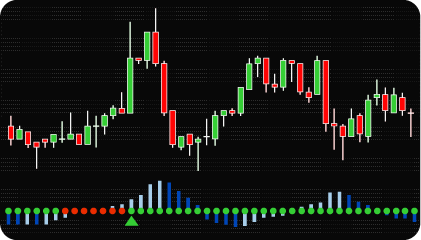
Visually, the NinjaTrader TTM Squeeze indicator consists of a histogram and small dots located along the zero line, indicating whether the asset is in squeeze.
Low-volatility consolidation phases are represented by red visual markers (dots). As volatility increases and the Bollinger Bands expand beyond the Keltner Channels, the markers transition to green, reflecting a shift toward a potential volatility expansion phase.
During these transitions, the Momentum histogram provides a visual representation of current price action strength. When the histogram is positioned above the zero-line, it reflects an upward directional bias; conversely, a position below the zero-line reflects a downward directional bias. The histogram values assist in evaluating the intensity of the current momentum alignment. The magnitude of histogram bars reflects the relative strength of momentum, while changes in slope may indicate shifts in momentum acceleration or deceleration.
The indicator is a versatile tool for analyzing breakout conditions and directional continuity. It allows users to identify structural shifts when price moves beyond established ranges, providing a technical framework for studying market dynamics. In trend-based methodologies, this tool assists in evaluating the current market environment and supports a more structured analytical approach.
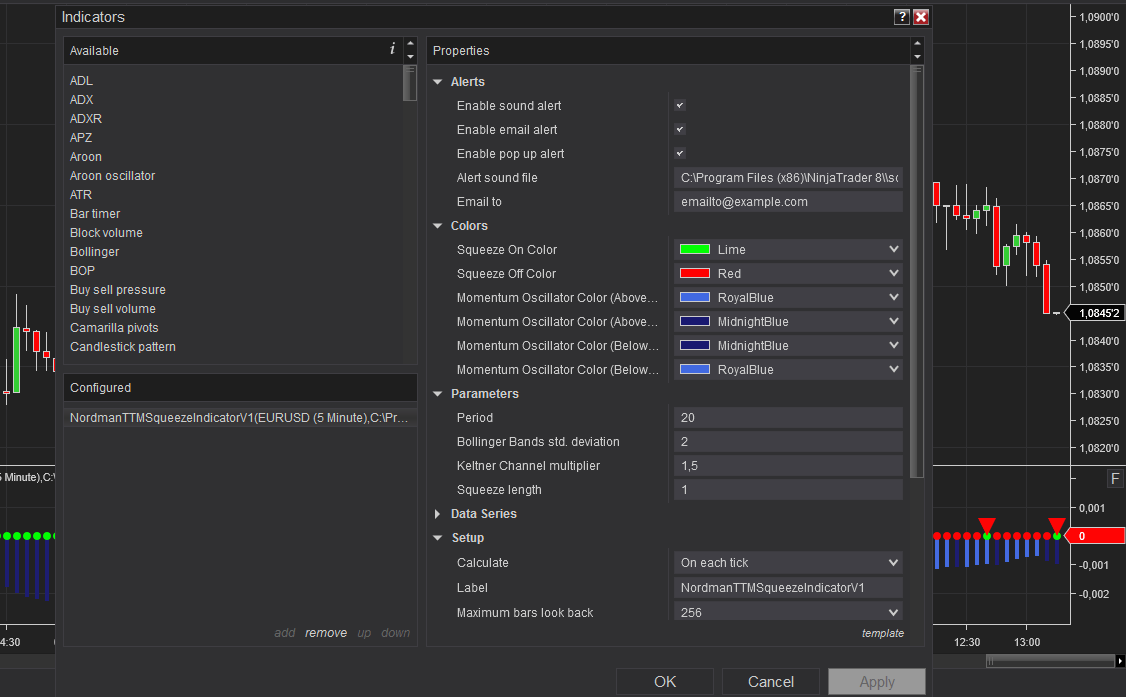
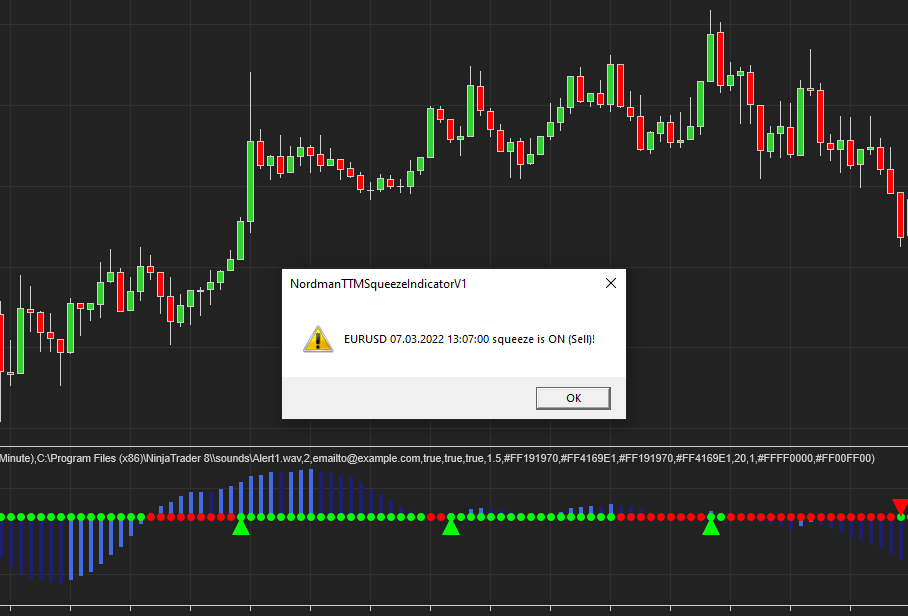
NinjaTrader TTM Squeeze Indicator allows you to configure various types of alerts to stay informed of volatility transitions in real-time.
Limitations of Volatility-Based Analysis
Volatility-based indicators reflect historical price behavior and do not predict future price movement. Observed conditions should be interpreted within a broader market context, including trend structure, liquidity, and external factors.
By default, the indicator utilizes standard Bollinger Bands and Keltner Channel parameters, alongside a 20-period Momentum Histogram. All input periods and calculation settings can be adjusted to suit individual analytical preferences.
A commonly used approach when working with the NinjaTrader TTM Squeeze Indicator involves analyzing volatility expansion following periods of compression when the price makes a strong move in one of the directions after a period of range fluctuations.
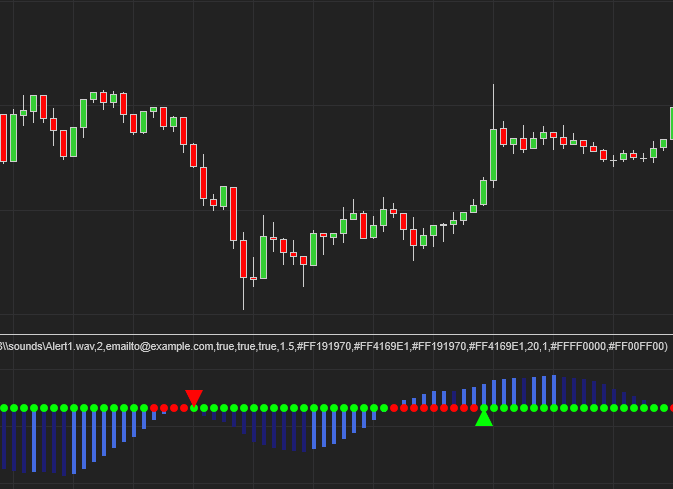
When the visual markers transition to green, it reflects a volatility expansion phase, highlighting a shift in market dynamics. The interaction of the histogram with the zero-line provides additional context for momentum analysis: a breach of the zero-line from below reflects an upward momentum shift, while a breach from above reflects a downward momentum shift. These events mark technical conditions that may be used for further market evaluation.
The indicator supports two primary analytical modes for momentum tracking:
Standard Mode: In this mode, upward directional bias is identified when the histogram is positioned above the zero-line, while downward directional bias is identified when it moves below the zero-line.
Ascent/Descent Mode: This mode focuses on the relative slope of the histogram. An upward-sloping histogram reflects strengthening bullish momentum, while a downward-sloping histogram reflects strengthening bearish momentum, regardless of their position relative to the zero-line.
The indicator works seamlessly across all timeframes, allowing you to track momentum cycles from short-term scalping to long-term trends. Observing similar conditions across multiple timeframes may provide additional context regarding the consistency of market behavior.
The indicator has the following parameters:
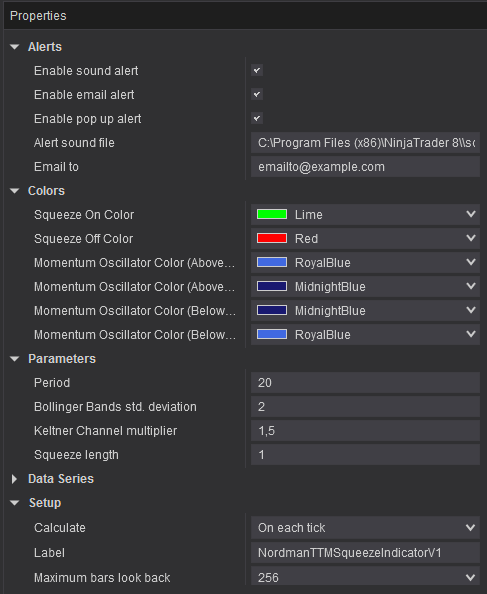
Alerts – configuration for various notification types (sound, pop-up, or email).
Signal Mode – select the analytical logic for marker detection: Standard Mode (zero-line based) or Ascent/Descent (slope-based).
Parameters – setting individual indicator parameters (Period, Bollinger Bands standard deviation, Keltner Channel multiplier).
Squeeze length – a specialized function that defines the minimum number of consecutive compression points (red dots) required before a directional marker is displayed.
We can customize this indicator to your needs — adding functions, modifying logic, or integrating it with other tools for your workflow.
We also convert indicators into Automated Trading Strategies with advanced functions (trailing stops, risk management, filters) tailored to your trading style strictly according to your specifications.
Request a free consultation to discuss the technical scope and timeline of your project.
We are committed to the ongoing development and refinement of our indicators. If you’ve spotted a bug, feel that something essential is missing, or have ideas that could make the indicator even better, just send us a message. Your feedback helps us improve and deliver tools that truly meet traders’ needs.
The indicator provides a set of exposed analytical plot outputs designed for structured integration with third-party strategy builders and automation tools such as BloodHound and BlackBird (SharkIndicators), as well as other algorithmic trading environments.
| Analytical Plot Name | Output Values |
| Momentum | Value |
| SqueezeOn | Value |
| SqueezeOff | Value |
| Long | > 0 |
| Short | > 0 |
| SqueezeState | Value |
Plot output names and descriptions are technical identifiers intended solely for software integration purposes and do not constitute trading advice, signals, or recommendations.
Nordman Algorithms is a trade name of Nordman Algorithms OÜ (Reg. No. 14435535), registered in Tallinn, Estonia.
Software Nature & User Responsibility — Nordman Algorithms provides algorithmic software tools for technical analysis. Nordman Algorithms is not a financial advisor and is not liable for any losses. All trades conducted based on the software’s output are executed at the user’s sole discretion and risk.
Visual Markers & Signal Disclosure — This software may display visual markers (such as arrows, dots, or alerts) when predefined mathematical conditions are met. These markers are provided for educational and analytical purposes only, must not be interpreted as financial guidance, and do not constitute a recommendation to buy, sell, or hold any financial instrument. Users must independently validate all visual cues within their own trading methodology.
No Financial Advice — Nordman Algorithms does not provide discretionary trading signals, investment advice, or managed signal services. Our software represents a mathematical visualization of historical and real-time data. The appearance of a visual marker does not guarantee a profitable trade or predict future market behavior.
Trading Risk Warning — Futures, Forex, and options trading involve significant risk. Risk capital is money that can be lost without jeopardizing financial security. Only risk capital should be used for trading. Past performance is not indicative of future results. View Full Risk Disclosure: https://www.nordman-algorithms.com/risk-disclosure/
ESMA Risk Warning — Financial instruments, especially those involving leverage such as CFDs and Forex, are complex and carry a high risk of rapid financial loss. Our software provides analytical outputs and visual markers based on predefined mathematical conditions and does not mitigate or reduce inherent market risks. You should carefully consider whether you understand how leveraged financial instruments work and whether you can afford the high risk of losing your capital.
CFTC Rule 4.41 — Hypothetical or simulated performance results have inherent limitations. Unlike actual performance records, simulated results do not represent real trading. Because trades have not actually been executed, these results may under- or over-compensate for the impact of market factors such as liquidity. No representation is being made that any account will achieve profits or losses similar to those shown.
Trademark Notice — NinjaTrader® is a registered trademark of NinjaTrader Group, LLC. No NinjaTrader company has any affiliation with the owner, developer, or provider of the products or services described herein, or any interest, ownership or otherwise, in any such product or service, or endorses, recommends or approves any such product or service.