Native MT5 development
MQL5
Expert Advisors, indicators, scripts and chart panels compiled for the MT5 terminal. Calculations, order handling and trade management run natively, on the account and symbols the terminal is connected to.
Explore MQL5 →Work with an experienced MT5 developer and MT5 programmer to build custom Expert Advisors, indicators, trade copiers, prop trading automation, and Python integrations. Our MetaTrader 5 development services turn your trading rules, analytical ideas, and external signals into working software.
From your initial requirements to native MT5 software and connected applications.
Nordman Algorithms develops custom MetaTrader 5 software from trading rules, calculation requirements, existing source code, and external signals. Our MT5 programmers build Expert Advisors, indicators, trade copiers, prop trading automation, and tools for managing trades and accounts.
Native functionality runs in MQL5 inside the terminal. Python integrations and connected C# or API services extend MT5 with analytics, reporting, external models, and coordinated execution. Each project is adapted to the target broker, account rules, and the way the software will be used.
Choose your main development service, or explore focused tools and improvements for an existing MT5 workflow.
Custom MQL5 EAs built around entry and exit rules, indicator signals, position sizing, and trade management.
Custom MT5 calculations, chart visuals, multi-timeframe analysis, and alerts tailored to your analytical approach.
Develop automation and account controls around the rules of compatible MT5 evaluation and funded accounts.
Copy trades between MT5 accounts or supported external platforms with symbol mapping, sizing, and account controls.
Receive signals from TradingView alerts, Telegram, Discord, webhooks, or an API source, validate the instructions, and execute them on MT5 accounts.
Rebuild existing MT4, TradingView, cTrader, or other platform software for the MT5 environment.
Connect Python analytics, models, reporting, and trading workflows with the MetaTrader 5 terminal.
Connect MT5 with market data feeds, external data providers, business applications, and trading services through supported APIs. Market-data connections are scoped together with order routing, since the two usually share the same interface.
Extend existing MQL5 source code, fix errors, add functions, and improve calculation or execution performance.
Monitor conditions across MT5 symbols and timeframes with scanners, alerts, and analytical dashboards.
Custom MT5 trade panel development for manual and semi-automated trading: order entry, position sizing, partial closes, and trade management.
MT5 account tools for exposure monitoring, daily loss limits, drawdown controls, position sizing, and emergency actions.
Automate focused MT5 tasks such as bulk order changes, data exports, chart setup, and account utilities.
Manage access to MT5 EAs and indicators with account restrictions, expiration dates, subscriptions, and license services.
Not every requirement fits a predefined category. Send a description, screenshots of what you have in mind, reference files, or existing MQL5 source code — we will review it and tell you what is technically possible on MT5 and what it would take.
From initial requirements to delivery, the project follows six clear steps. Scope, price, and timeline are agreed before development begins.
A complete technical specification is not required. Send whatever material you already have; we clarify the remaining requirements with you during the assessment.
The exact project files and delivery scope are confirmed before development begins.
Native MQL5 development inside the terminal, plus the external languages and interfaces that carry data and signals in and out.
Expert Advisors, indicators, scripts and chart panels compiled for the MT5 terminal. Calculations, order handling and trade management run natively, on the account and symbols the terminal is connected to.
Explore MQL5 →MetaTrader 5 ships an official Python package that connects to a running terminal for market and account data, analytics, models and trade operations. It complements MQL5 rather than replacing Expert Advisors on the chart.
Explore Python →External desktop tools and services that work alongside MT5, plus compatible .NET libraries called from MQL5 where a project needs functionality the language does not cover on its own.
Explore C# / .NET →MT5 software exchanging data and signals with external HTTP services: broker endpoints, market data, reporting, licensing or your own systems. A bridge or server component is added where the terminal cannot call the service directly.
Explore REST API →Realtime message and data streams handled by an external service with a compatible implementation, then passed to the MT5 side. WebSocket is not a native terminal interface, so the streaming component lives outside it.
Explore WebSocket API →TradingView and other alert sources deliver messages to a hosted receiver, which validates them and passes the instruction to the MT5 execution component. The receiver, not the terminal, is the HTTP endpoint.
Explore Webhook →MT5 covers both worlds: broker-listed forex and CFDs, and genuine exchange-listed instruments where the broker provides exchange connectivity. What your account carries decides which of these a project can reach.
Forex is the core MT5 use case. Brokers commonly list CFDs alongside it — indices, commodities, metals, shares and crypto among them — and the exact symbols depend on the broker and account.
Forex Automation →Exchange-listed shares through an MT5 broker with exchange connectivity. This is distinct from share CFDs, which sit under Forex & CFDs — not every retail MT5 account provides real equities.
Stock Automation →Futures strategies, indicators and scanners built around contract specifications, sessions and rollover. Availability requires an exchange-connected broker and account.
Futures Automation →Options analysis and automation where the broker and exchange support them. This is not universal across retail MT5 accounts, so the account is confirmed before scoping.
Options Automation →MT5 development is planned around the actual trading workflow, technical environment, and delivery requirements of each project.
Expert Advisors, indicators, panels, scripts, and connected tools built around the MetaTrader 5 and MQL5 environment.
Broker, account model, symbol specifications, trading rules, integrations, and installation requirements are considered from the start.
Requirements, project scope, milestones, price, and expected delivery are agreed before development begins.
Confidential project discussions, source code delivery, and intellectual-property terms are agreed for the project.
Receive installation guidance, technical clarification, and the agreed post-delivery support for your MT5 solution.
These selected products demonstrate how our team applies MT5 development expertise to ready-made indicators and execution tools. They represent only one part of our broader custom development capabilities.
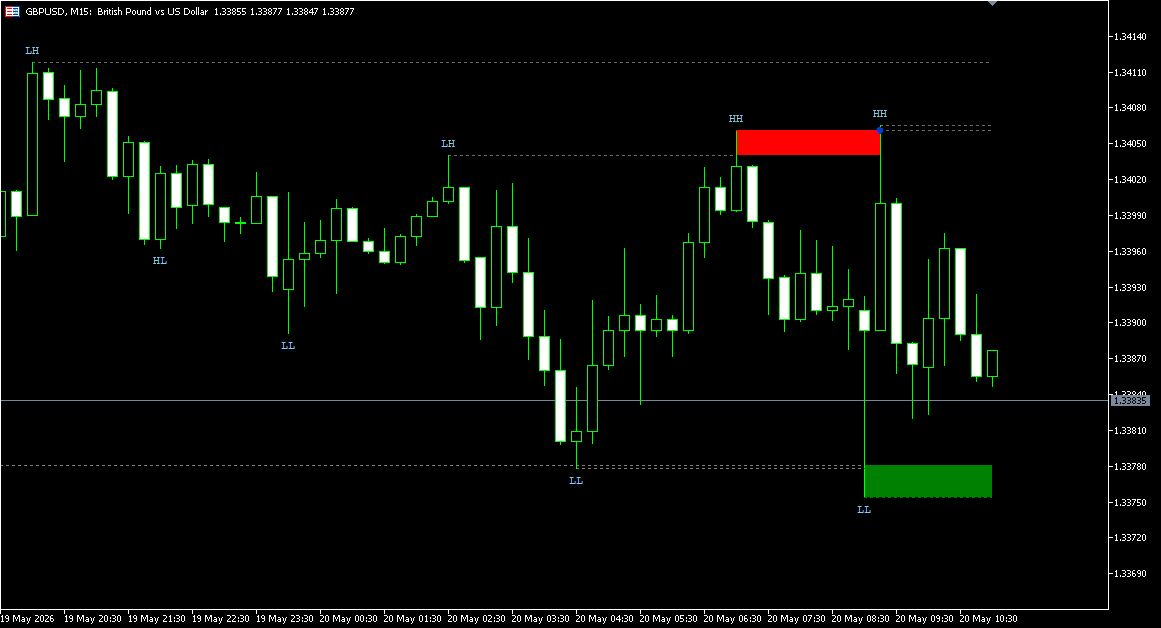 Best Seller
Liquidity Sweeps indicator: wick-based and break-and-retest sweeps, swing liquidity levels, sweep zone lifecycle, four mitigation modes, alerts.
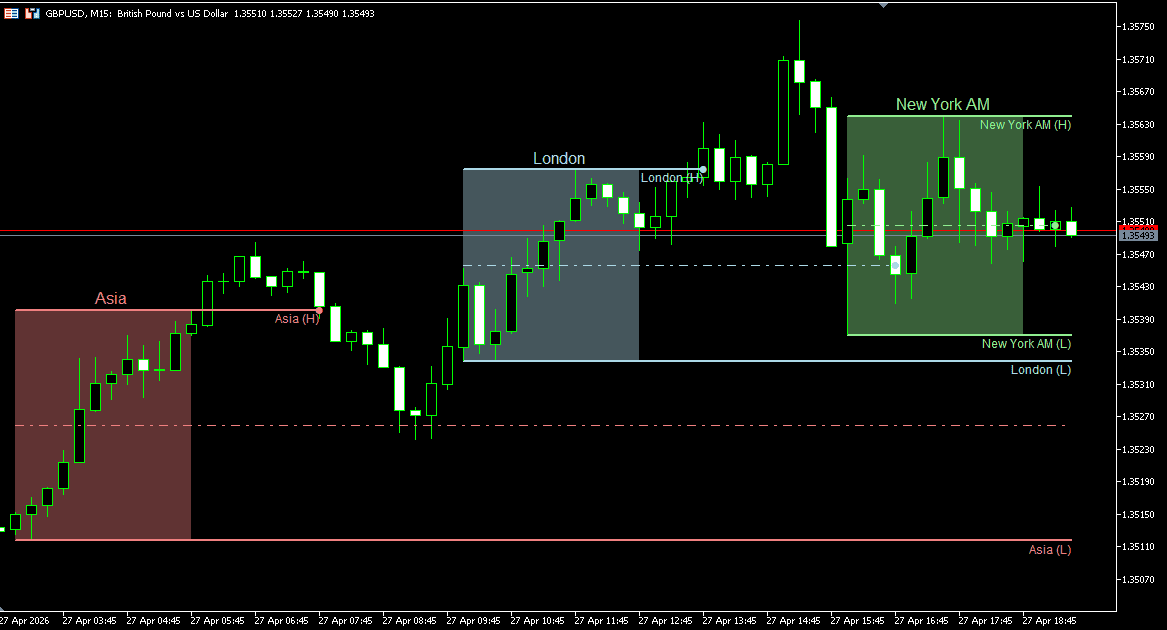 Best Seller
Kill Zones indicator: Asia, London, New York and custom sessions, high, low and middle pivots, pivot extension, 10 custom pivots, breakout alerts.
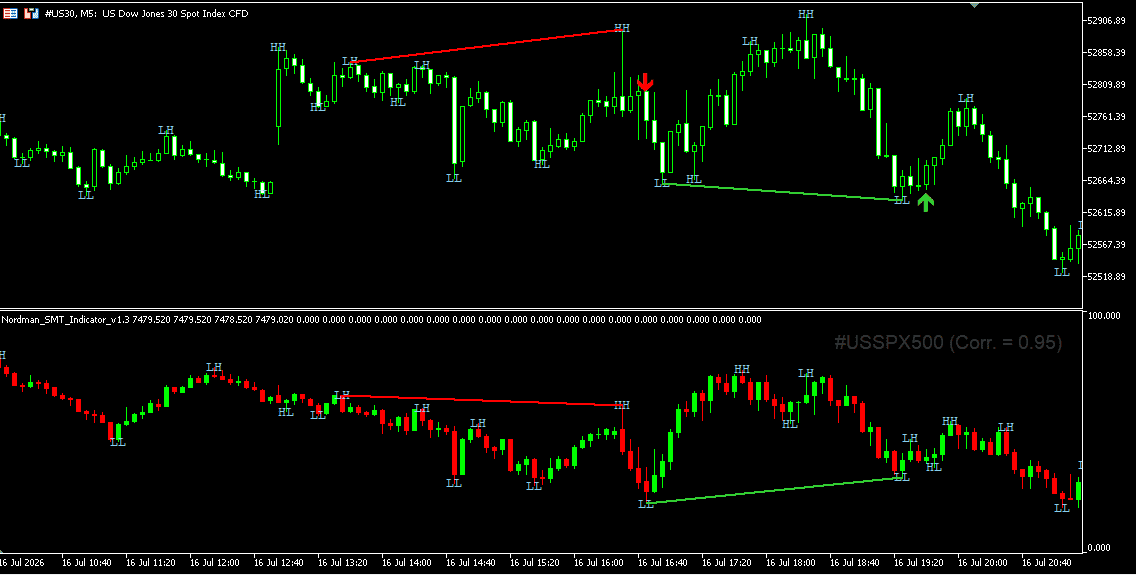 New Release
SMT Divergence indicator: classic and hidden SMT between correlated instruments, forming and confirmed states, second instrument, Kill Zones filters, alerts.
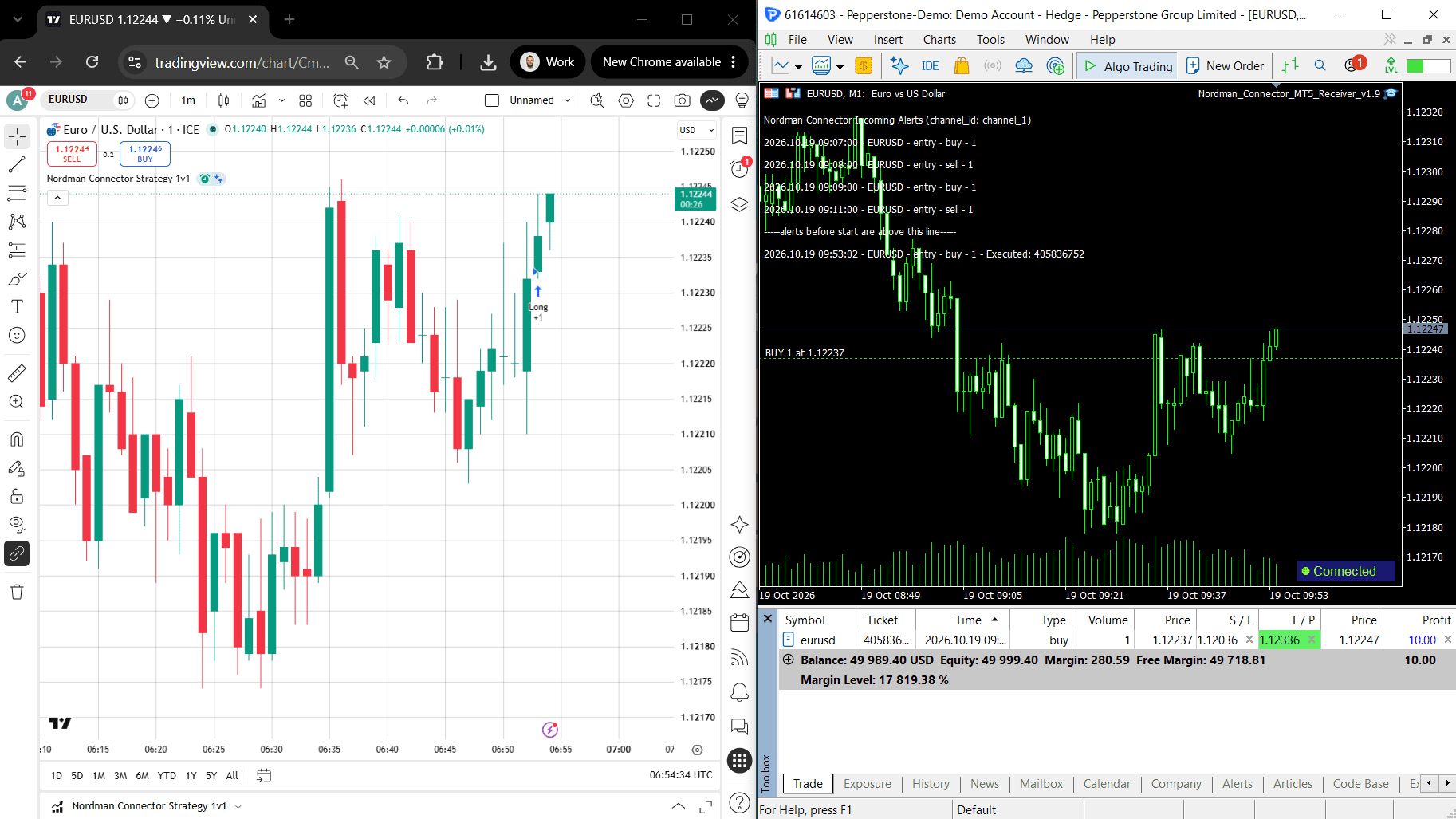
Cloud copier from TradingView alerts to MT5: manual, strategy and indicator workflows, No-Code setup, TP/SL, lot sizing, prop limits, demo + live account.
Explore our own MT5 tools, or discuss a custom solution built around your requirements.
Concise answers to common questions about custom MQL5 and MT5 development.
Yes. Our MT5 programmers develop custom Expert Advisors from trading rules, indicator conditions, or a reference implementation. We also modify existing MQL5 source code to add functions, resolve errors, and improve performance. An EA can include entry and exit logic, position sizing, risk controls, session rules, alerts, trade management, and Strategy Tester inputs.
The cost depends on the number of rules, interfaces, integrations, testing requirements, and whether an existing codebase is involved. After reviewing the requirements, we provide a project scope, price, and delivery estimate before development begins.
Yes. We develop account monitoring, loss-limit controls, trade management, and automated execution for compatible MT5 evaluation and funded accounts. The scope is based on the target firm’s supported platforms and current account rules, which we review with you before development.
MT4 uses MQL4, while MT5 uses MQL5 and a different trading and testing architecture. MT5 supports features such as a multi-threaded Strategy Tester, additional order types, economic calendar access, and netting or hedging account models. An MT4 project normally requires a structured MT5 conversion, not a direct file copy.
Yes. Python can be connected to MetaTrader 5 for data processing, research workflows, model inference, signal generation, reporting, and external system coordination. The architecture depends on latency, hosting, account access, and whether execution remains inside an MQL5 Expert Advisor.
Delivery time depends on project scope and testing complexity. A focused indicator or script may require less time than a multi-symbol Expert Advisor, trade copier, external API integration, or dashboard. A specific estimate is provided after the requirements and references are reviewed.
Share the strategy rules, existing source code, screenshots, or integration requirements. We will review the technical scope and outline the next development steps.