Hedging EA is a trading robot that automates hedging logic — the practice of opening opposing positions on the same or correlated instruments to manage directional exposure. In the classic version, hedging entails compensation for losses on one asset at the expense of another. The use of a specialised EA allows this logic to be automated — removing the need for continuous manual monitoring of both positions.
Most of these automated trading algorithms work on the principle of opening opposite positions for the same trading instrument.
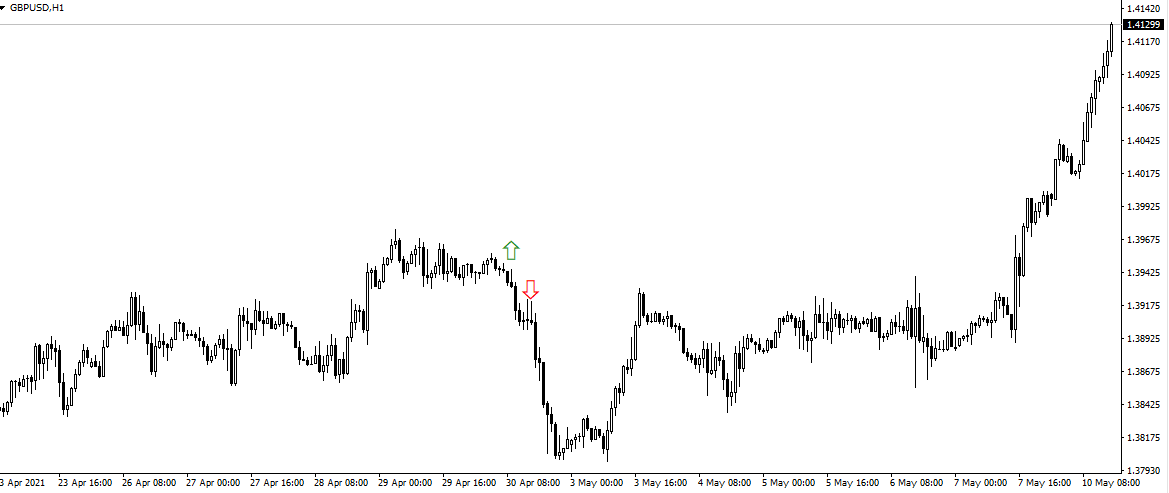
This can be any trading instrument, including the GBP / USD currency pair, which is considered in the example. A trading EA opens a long position and, if price moves in the defined direction, closes it when the predefined target level is reached. If the price moves in the opposite direction, a hedging position is opened. This strategy is also known as Forex locking.
The hedge expert advisor will control two positions until the rule of the trading system, that is used in such an algorithm, is fulfilled (it can be anything, for example, triggering a take profit or a trailing stop).
Usually, a hedge EA is based on kind of basic strategy for opening positions based on indicators or chart instruments. For example, one of the simplest options is buying when the price overcomes the highs of the previous (or several) days.
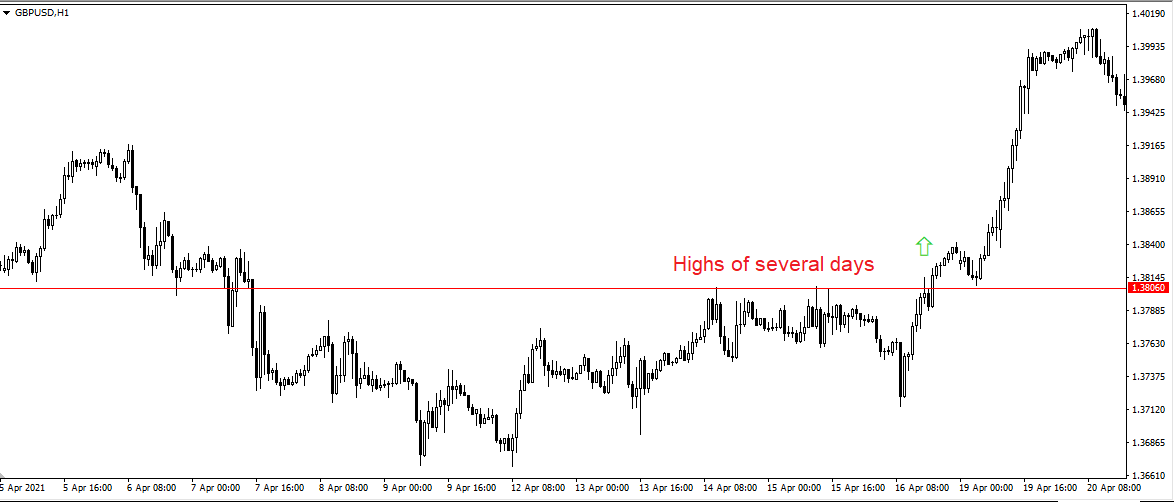
In the screenshot, the price has been testing resistance for several days, and after its breakout, growth begins. At this point, the hedging EA can open a long position. Further development of the situation shows that under those specific market conditions, the position would have remained open until the predefined close condition was met. If the price went in the opposite direction below the high after the open, the hedging position would have partially offset the directional exposure under those specific market conditions.
This is one example of such a strategy. It can be based on any indicator, for example, on Bollinger Bands.
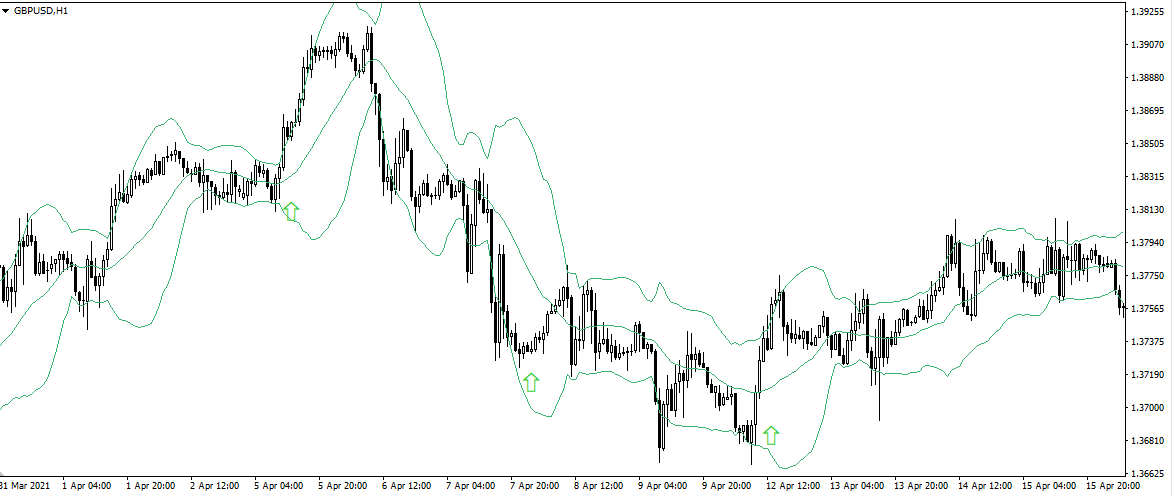
In this case, a bullish condition is registered when price interacts with the lower Bollinger Band boundary. Price reaching the upper boundary reflects a potential close condition. A bearish hedging condition may be registered when the lower boundary is breached.
All of the above mentioned can be done manually. Traders use strategies, including those described above. They can independently make a decision when and where to open locking positions without using a hedging EA. However, the latter has several advantages:
The core challenge in hedging EA design is not the initial position pair — it is the exit logic. Opening opposing positions is straightforward; defining the conditions under which the lock is resolved without realising the full loss on both sides requires precise sequencing of close conditions, partial closes, and lot sizing relationships between the original and hedging position.
In practice, the profitability of a hedging strategy depends on the spread between the two positions at the moment of exit. If the hedging position is closed too early, the original position remains exposed. If both positions are held too long in a trending market, the combined drawdown may exceed what a simple stop loss would have produced. A well-configured hedging EA manages this by defining asymmetric close conditions — closing the profitable leg at a defined target while simultaneously adjusting the exposure of the losing leg through partial closes or lot scaling.
This level of logic cannot be reliably implemented manually across multiple instruments or sessions. It requires precise order sequencing, real-time position tracking, and consistent application of the defined rules — which is the primary operational justification for automating hedging strategies through an EA rather than executing them by hand.
Not all brokers can use this type of trading robot. Some companies prohibit traders from opening opposite (hedging) positions on the same asset. Having opened a buy deal with such a broker, a trader will not be able to open a sell deal at the same time. In this case, its purchase will be automatically closed.
Configuration accuracy directly affects how the EA behaves under different market conditions. The trader must independently calculate his risks by determining the level of the stop order and take profit. Too much risk in one trading position can lead to the loss of the entire deposit.
The definition of take profit targets should be consistent with the average number of points by which the price of a trading instrument changes over the selected period. If the average daily price movement for EUR / USD does not exceed 60-70 points on average, it makes no sense to set take profit above this value, provided that the position is closed within one trading day. Stop orders should be determined based on the acceptable risks for the trader’s trading system.
Hedging strategies carry inherent risk. In strongly trending markets, both the original and hedging positions may accumulate loss simultaneously before exit conditions are met. The EA executes according to its defined parameters and does not adapt to unexpected market conditions. Configuration, risk levels, and strategy logic remain the sole responsibility of the user.
Despite the fact that there are a large number of hedging EAs on the market, it is very difficult to find a suitable one. Such a product must meet all the requirements of a trader. Many developers do not show or disclose the essence of their algorithms. In some cases, the proposed settings are not enough for flexible management of a hedge EA.
The problem of finding a forex hedging EA is aggravated by the presence of unscrupulous players in the market for developing trading robots. Some products do not meet the stated criteria, including in terms of quality. Sometimes you can find forex hedging EA that work exclusively on the Martingale principle without using trading strategies in them.
After purchasing third-party robots, additional testing is typically required. The delivered product may not match the stated specifications or cover all required use cases.
Another problem is customer support. Not every development company offers support for traders after they have bought an automated trading system.
For a hedging EA built to precise specifications without the limitations of off-the-shelf products, it is recommended to order a hedging EA. The customer will be required to draw up a technical assignment indicating all the parameters of the algorithm. Based on the results of the work, the trader receives a fully developed EA built to the agreed specifications.
The backbone of almost any hedging robot is a strategy. By ordering an expert advisor from our company, you can choose any strategy that you use. Moreover, we work with projects of any complexity. Our programmers will carefully study your proposed strategy and implement it in accordance with the terms of reference when writing a hedging robot.
If you have any doubts about your trading strategy, our developers offer free advice before getting started. This allows you to take into account all your requirements and wishes regarding a hedging EA as accurately as possible.
Choosing us as a developer for your trading robot, you work with a development team with over 10 years of experience building automated trading systems across multiple platforms and strategy types.
All delivered products include warranty coverage — any issues identified after delivery are resolved at no additional cost.