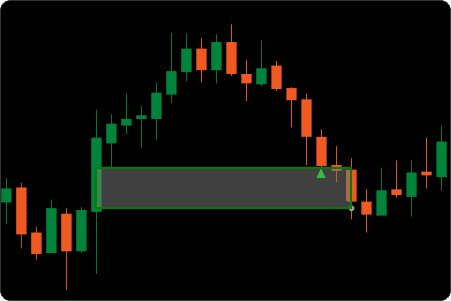
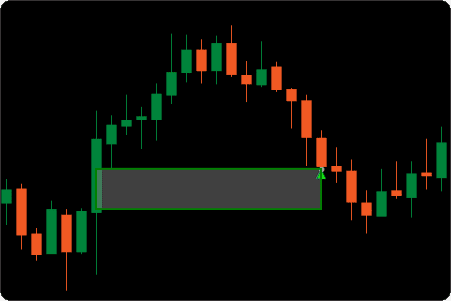
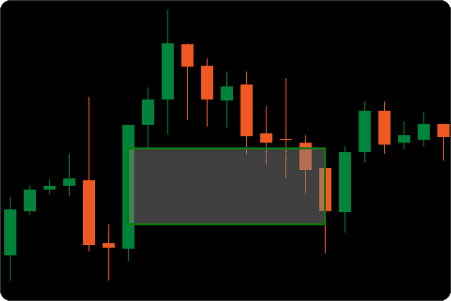
Allowed Direction
Controls which gap direction is displayed: Both, Bullish Only, or Bearish Only.
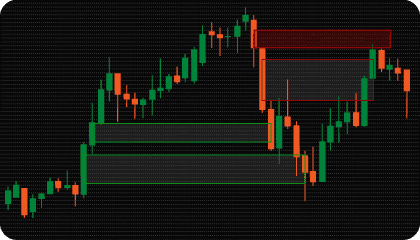
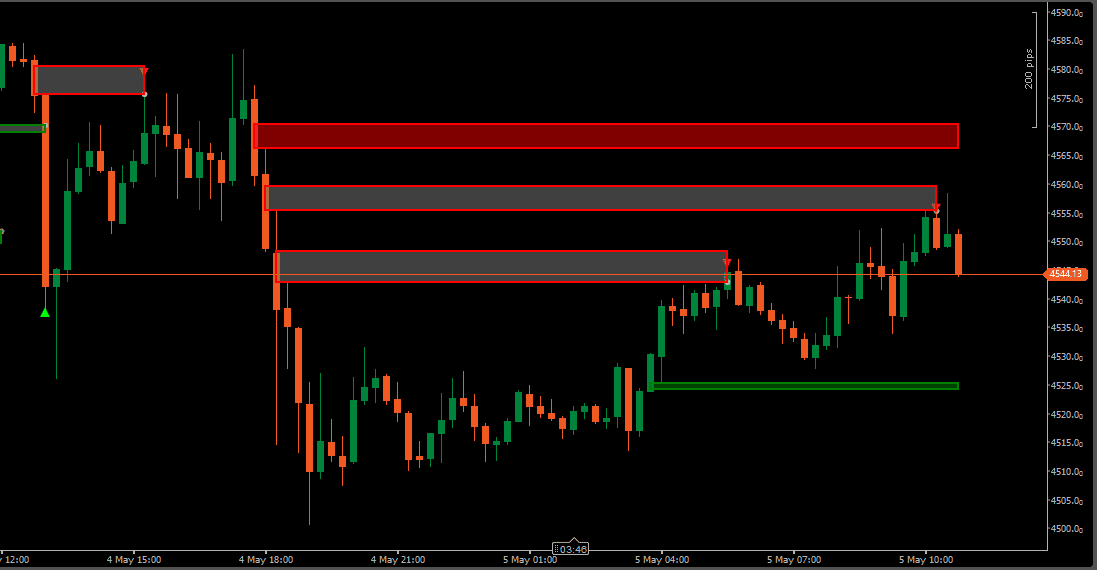
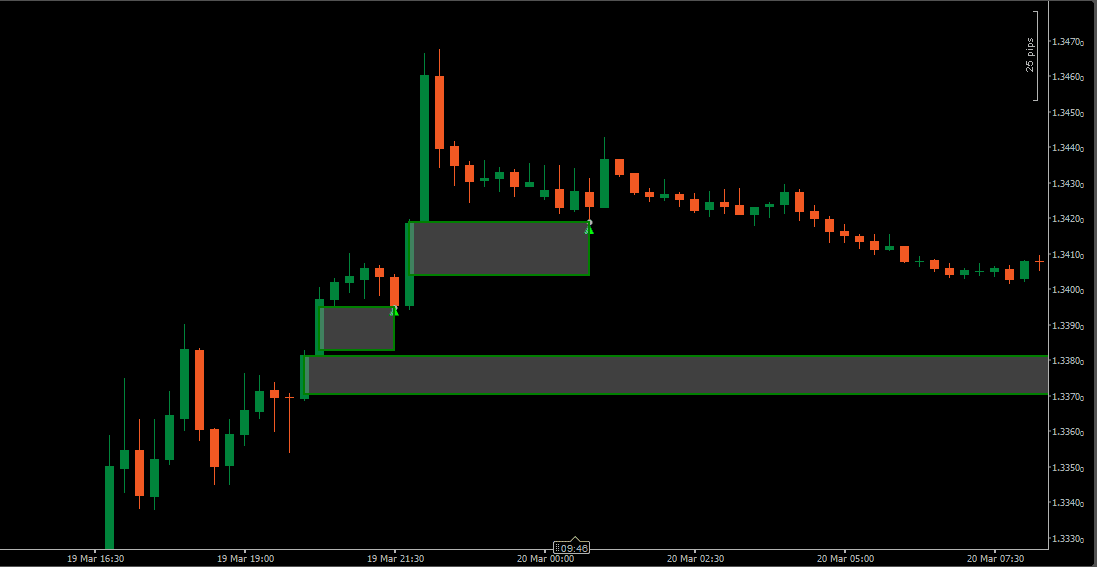
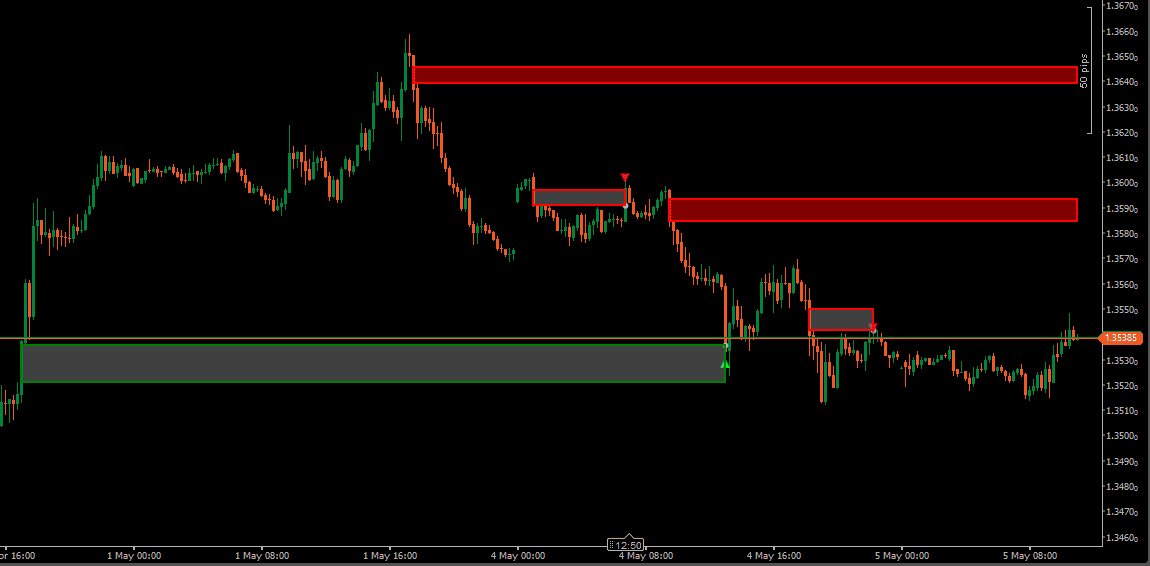
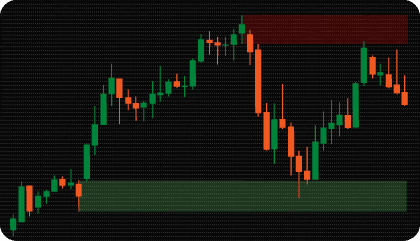
A Fair Value Gap (FVG) represents a price imbalance formed during strong directional movement, where price leaves an area with limited two-sided trading.
These imbalances are commonly used in ICT (Inner Circle Trader) and Smart Money Concepts (SMC) methodologies to identify areas where price may later return to rebalance inefficient movement.
Bullish gaps form during upward displacement, while bearish gaps form during downward movement. Once created, these zones often act as reference areas when price revisits the imbalance.
Not every gap remains relevant. Some are filled quickly, others stay open and continue to influence price behavior. What matters is not just the gap itself — but how price interacts with it over time.
This indicator structures that process by detecting, filtering, and managing FVG zones directly on the chart.
The indicator automatically detects Bullish and Bearish Fair Value Gaps and displays them as structured zones directly on the chart.
Directional filters allow focusing on bullish gaps only, bearish gaps only, or both directions — useful when working with a defined bias rather than monitoring all imbalances at once.
Minimum gap size can be defined using ticks, points, or percentage. This filters out very small imbalances that may add noise to the chart.
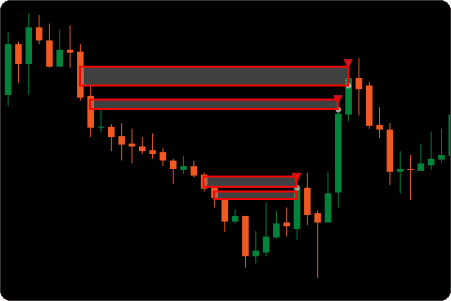
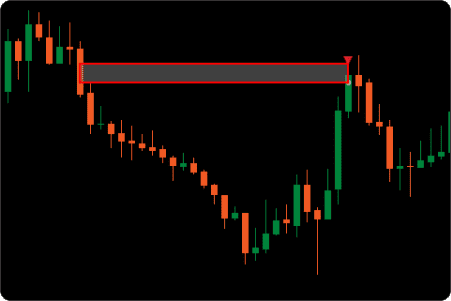
FVG Min Length (bars) is one of the more important settings. It defines how long a newly created gap must remain untouched before it becomes visible on the chart. If price immediately returns into the zone before this minimum is reached, the gap is not displayed. Fast invalidations are filtered out automatically — only gaps that survive long enough to be evaluated reach the chart.
Each Fair Value Gap moves through a defined sequence of states after it forms.
A new gap begins as Active. If price later satisfies the selected mitigation condition, the zone transitions to Mitigated. If the gap remains untouched beyond the configured lifetime, it becomes Expired — but is not removed. Expired zones stay on the chart in a separate visual state for historical reference.
Zone lifetime can be measured in bars or minutes, which allows the logic to adapt to different chart speeds and trading styles. A display limit can also be set to control how many zones remain visible at once, keeping the chart readable without losing access to older zones.
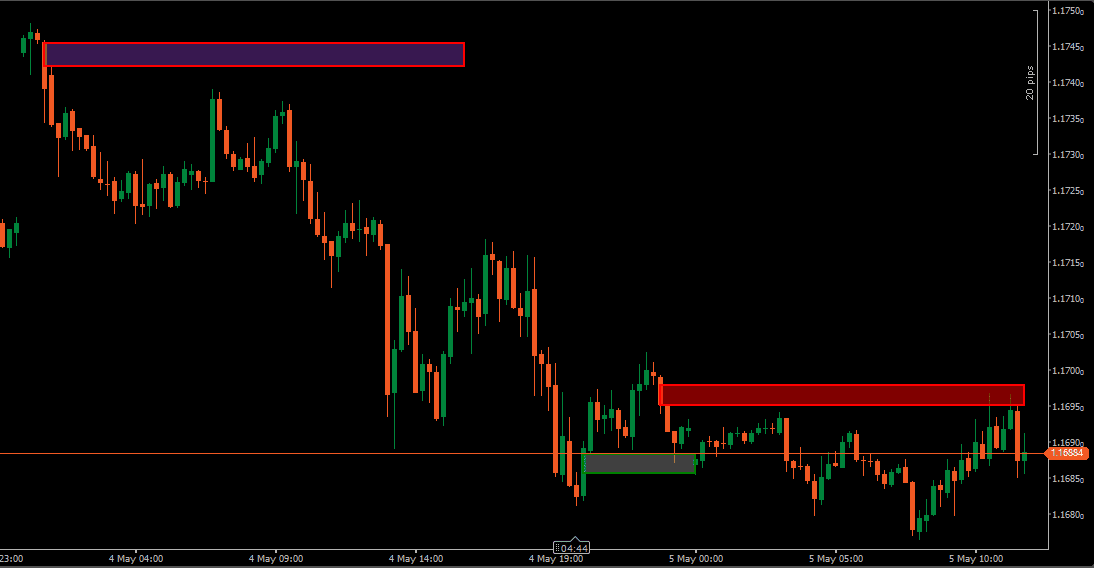
How a gap is considered filled has a direct effect on how the chart reads. This indicator supports three mitigation models.
Full Mitigation requires the entire gap to be closed before the zone changes state. This is the strictest interpretation.
Partial Mitigation triggers when price first enters the zone according to the selected mitigation logic. Useful when early interaction is enough to consider the imbalance touched.
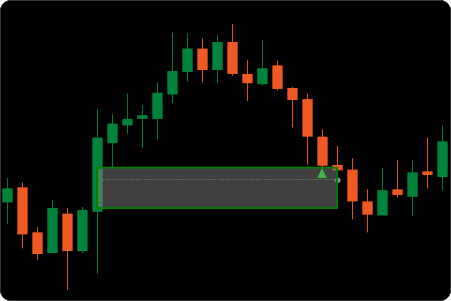
Threshold Mitigation requires price to fill a defined percentage of the gap depth. When this mode is active, a visual threshold line is drawn directly inside the zone — showing the exact price level required for mitigation. The zone changes state only when that line is reached.
Mitigation can be confirmed using High/Low prices or Close prices. Close mode is stricter. High/Low mode reacts faster.
One important behavior: when Shrink Mode is enabled, mitigation is always evaluated using High/Low regardless of the selected price type. This ensures consistent visual contraction as price fills the zone.
Active, mitigated, and expired zones each have independent color and opacity controls, making it easy to separate what is currently relevant from what is historical context.
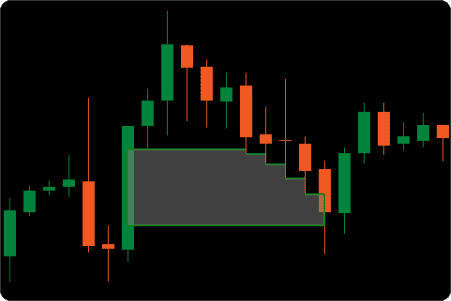
The indicator includes Shrink Mode — when enabled, the zone contracts dynamically as price partially fills the imbalance. This is not a cosmetic effect. The zone boundary is updated step by step based on real price interaction, so partial mitigation becomes visible in real time rather than appearing as an all-or-nothing state change.
Display filters allow showing only active zones, only mitigated zones, only expired zones, or any combination — depending on what the current analysis requires.
The indicator provides alerts for three key events: FVG detected, FVG touched, and FVG mitigated. Notifications can be configured as popup, sound, or email.
Touch signals have an important behavior that distinguishes this indicator from simpler tools. A signal is not limited to the first time price enters the zone. If price enters, exits, and later re-enters the same active gap — a new touch signal can be generated.
This retouch-from-outside logic allows tracking repeated interaction with the same imbalance, which is more useful than treating a zone as a one-time event after the first touch.
Optional markers and labels can be displayed on the chart for detection, mitigation, and expiration events.
Run it quietly, or use it as an active FVG monitoring tool.
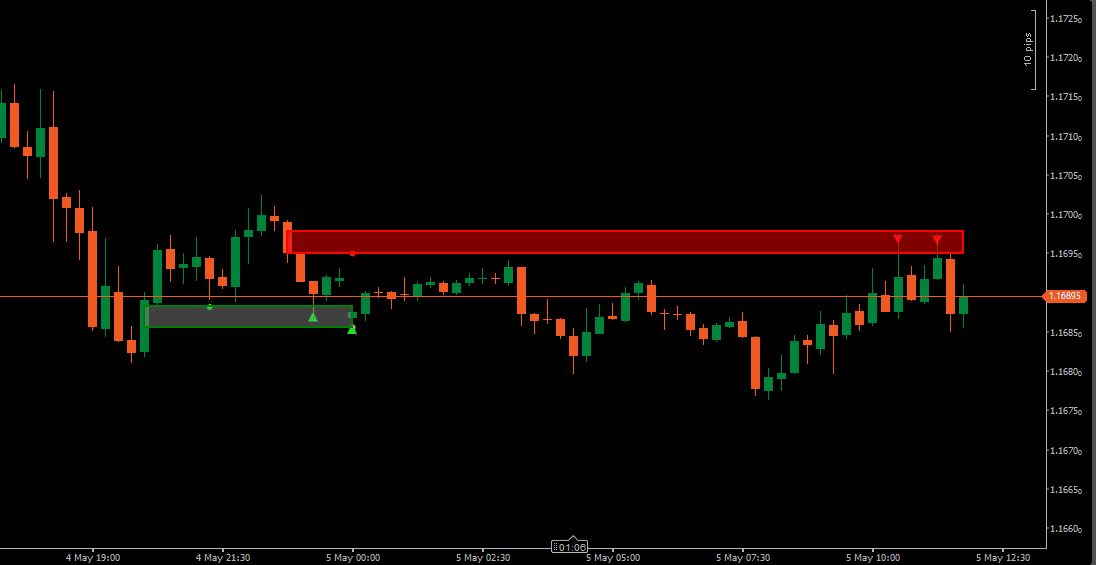
Active zones represent imbalances that have not yet been resolved. These are the zones most traders focus on first, because they still reflect unfinished price business.
Bullish zones are typically monitored when price has moved above the gap and later begins to retrace downward into the area. Bearish zones are watched when price moved below the gap and later rallies back up into it.
The key question with any active zone is not just whether price returns — but how it behaves when it gets there.
When price satisfies the selected mitigation condition, the zone transitions to Mitigated status. It remains visible on the chart in a separate color, providing historical context without competing visually with active zones.
If price never returns within the configured lifetime, the zone becomes Expired. Expired zones help identify imbalances that were never filled — which can sometimes be just as informative as those that were.
Keeping both mitigated and expired zones on the chart makes it easier to review how price has interacted with imbalance areas over time.
A touch event occurs when price re-enters an active Fair Value Gap that has not yet been mitigated.
Unlike indicators that treat the first touch as the only event, this indicator can generate a new signal each time price re-enters the zone from outside after previously exiting it. This retouch logic is useful when the same imbalance is visited multiple times — each return represents renewed interaction with an unresolved area.
This is particularly relevant in ranging or slowly trending markets where price may test the same zone more than once before committing to a direction.
Controls which gap direction is displayed: Both, Bullish Only, or Bearish Only.
Controls which zone states remain visible on the chart.
Switches between Standard mode (fixed zone boundaries) and Shrink Mode (zone contracts dynamically as price fills the imbalance).
Defines when a Fair Value Gap is considered mitigated.
Sets the percentage depth required when Threshold mitigation is selected. A visual threshold line is drawn inside the zone at this level.
Specifies which price is used to confirm mitigation: High/Low or Close. Note: when Shrink Mode is active, High/Low is always used regardless of this setting.
Selects how minimum zone size is measured (Ticks, Points, or Percentage) and sets the minimum value. Gaps smaller than this threshold are not displayed.
Defines how many bars a newly created gap must remain untouched before it becomes visible. If price returns into the zone before this minimum is reached, the gap is filtered out entirely.
Controls expiration logic. When enabled, zones that remain unfilled beyond the set duration (in bars or minutes) transition to Expired status.
Limits how many zones are visible at the same time. Useful on busy charts or when focusing on the most recent imbalances.
Need changes to this indicator? We can customize it to your specifications — adding new functions, modifying logic, refining visuals, or integrating it with other cTrader tools.
We also convert indicators into cBots with advanced features such as trailing stops, position parameter controls, execution filters, and rule-based automation built to your technical specifications.
Request a free consultation to discuss the technical scope, timeline, and available development options.
We are committed to the ongoing development and refinement of our indicators. If you’ve spotted a bug, feel that something essential is missing, or have ideas that could make the indicator even better, just send us a message. Your feedback helps us improve and deliver tools that truly meet traders’ needs.
A Fair Value Gap is a price imbalance formed during strong directional movement, where price leaves an area with limited two-sided trading. The concept is widely used in ICT and Smart Money Concepts (SMC) methodologies as a way to identify areas where price may later return.
No. Once a Fair Value Gap is detected and plotted, its location is fixed based on completed candle data. The zone does not move retroactively.
Zone status may later update to mitigated or expired as price develops, but the original imbalance boundaries remain unchanged.
Most FVG tools draw boxes and stop there. This indicator manages the full lifecycle of each zone and includes features that are not common in standard implementations.
Key differences include:
FVG Min Length defines how many bars a newly created gap must remain untouched before it becomes visible on the chart.
If price immediately returns into the zone before this minimum is reached, the gap is filtered out entirely. This removes short-lived or immediately revisited imbalances that would otherwise clutter the chart with noise.
Shrink Mode dynamically reduces the visible size of a zone as price partially fills the imbalance. The zone boundary updates step by step based on actual price interaction — not as a cosmetic effect.
When Shrink Mode is active, mitigation is always evaluated using High/Low prices regardless of the Mitigated Price Type setting. This ensures the visual contraction stays consistent with the underlying logic.
Yes. If price enters an active zone, exits it, and later re-enters from outside, a new touch signal can be generated. This retouch logic allows tracking repeated interaction with the same imbalance rather than treating a zone as a one-time event after the first touch.
Threshold Mitigation requires price to fill a defined percentage of the zone depth before it is considered mitigated. When this mode is selected, a visual threshold line is drawn directly inside the zone, showing the exact price level required for mitigation.
The zone changes state only when price reaches that line — not before.
Different methods suit different analytical approaches. Partial is fastest to trigger, Full is strictest, Threshold gives precise control.
Yes. Both mitigated and expired zones can remain on the chart using distinct colors and opacity settings. This allows reviewing how price interacted with previous imbalance areas while keeping active zones visually separate.
The indicator works on any instrument available in cTrader, including Forex pairs, Gold, Indices, and CFDs.
FVG logic applies to any timeframe. Lower timeframes highlight shorter-term imbalances and faster reactions, while higher timeframes show broader structural gaps that may take longer to be revisited. The preferred timeframe depends on trading style and the type of setups being tracked.
Nordman Algorithms is a trade name of Nordman Algorithms OÜ (Reg. No. 14435535), registered in Tallinn, Estonia.
Software Nature & User Responsibility — Nordman Algorithms provides algorithmic software tools for technical analysis. Nordman Algorithms is not a financial advisor and is not liable for any losses. All trades conducted based on the software’s output are executed at the user’s sole discretion and risk.
Visual Markers & Signal Disclosure — This software may display visual markers (such as arrows, dots, or alerts) when predefined mathematical conditions are met. These markers are provided for educational and analytical purposes only, must not be interpreted as financial guidance, and do not constitute a recommendation to buy, sell, or hold any financial instrument. Users must independently validate all visual cues within their own trading methodology.
No Financial Advice — Nordman Algorithms does not provide discretionary trading signals, investment advice, or managed signal services. Our software represents a mathematical visualization of historical and real-time data. The appearance of a visual marker does not guarantee a profitable trade or predict future market behavior.
Trading Risk Warning — Futures, Forex, and options trading involve significant risk. Risk capital is money that can be lost without jeopardizing financial security. Only risk capital should be used for trading. Past performance is not indicative of future results. View Full Risk Disclosure: https://www.nordman-algorithms.com/risk-disclosure/
ESMA Risk Warning — Financial instruments, especially those involving leverage such as CFDs and Forex, are complex and carry a high risk of rapid financial loss. Our software provides analytical outputs and visual markers based on predefined mathematical conditions and does not mitigate or reduce inherent market risks. You should carefully consider whether you understand how leveraged financial instruments work and whether you can afford the high risk of losing your capital.
CFTC Rule 4.41 — Hypothetical or simulated performance results have inherent limitations. Unlike actual performance records, simulated results do not represent real trading. Because trades have not actually been executed, these results may under- or over-compensate for the impact of market factors such as liquidity. No representation is being made that any account will achieve profits or losses similar to those shown.